Teeth Whitening
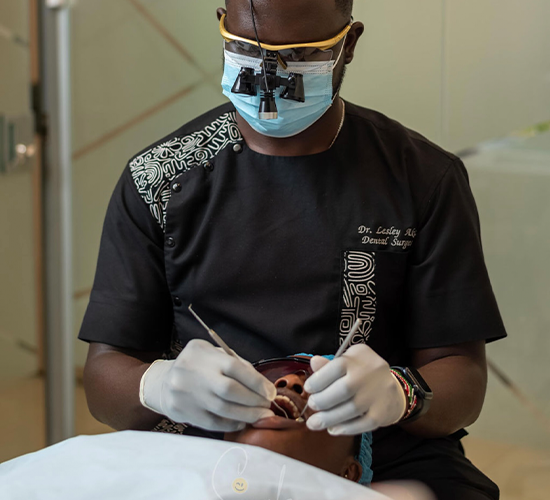
Teeth Whitening in Parklands, Nairobi
Whiten Your Smile Safely at Ridgepark Dental Clinic
What Is a Dental Implant?
A dental implant is a small, biocompatible post—usually titanium or zirconia—that replaces the root of a missing tooth. It supports a crown, bridge, or denture to create a stable, natural-looking replacement.
A complete implant tooth has three parts:
- Implant fixture – the post placed gently into your jawbone
- Abutment – the connector piece on top of the implant
- Crown, bridge, or denture – the visible part that looks like your natural teeth
Once healed, the implant is fixed in place. You don’t remove it, and you can eat, talk, and smile without worrying about it moving around.
What Is Teeth Whitening?
Teeth whitening is a cosmetic dental treatment that lightens the colour of your natural teeth.
Unlike cleaning, which removes plaque and tartar from the surface, whitening uses specially formulated gels that gently break down:
- Surface (extrinsic) stains from coffee, tea, wine, tobacco, curry, etc.
- Some deeper (intrinsic) discolouration within the tooth enamel
The result is a brighter smile that still looks natural—just cleaner, fresher, and more confident.
Common Reasons People Choose Teeth Whitening
Patients come to us for whitening for many reasons, including:
- Stains from food and drinks – tea, coffee, soda, red wine, dark sauces
- Smoking or tobacco discolouration
- Age‑related yellowing of enamel
- Special occasions – weddings, graduations, job interviews, photoshoots
- Wanting their teeth to match new crowns or veneers more closely
If you’re happy with the shape and alignment of your teeth but not the colour, whitening is often a simple, minimally invasive solution.
Professional Whitening vs Over-the-Counter Products
There are many whitening toothpastes, strips, and DIY kits available—so why see a dentist?
Professional whitening at Ridgepark Dental Clinic offers:
- Stronger, more effective gels than shop‑bought products
- Customised treatment based on your teeth, stains, and sensitivity
- Supervision by a dentist, keeping your gums and enamel safe
- Realistic expectations about how white your teeth can safely go
- Faster results, especially with in‑office whitening
Over‑the‑counter products can be:
- Too weak to deliver noticeable change
- Poorly fitted, allowing gel to irritate gums
- Misused (too often or too long), risking sensitivity or damaged enamel
We often see patients who’ve tried DIY options with little success or discomfort—and then get the results they wanted through a short, controlled professional treatment.
Teeth Whitening Options at Ridgepark Dental Clinic
We offer two main whitening approaches, which can also be combined for even better and longer‑lasting results.
1. In‑Office (Chairside) Teeth Whitening
This is the fastest way to whiten your teeth.
How it works:
- We examine your teeth and gums to ensure whitening is safe for you.
- We record your starting shade and discuss your desired result.
- Your gums and lips are protected.
- A professional‑strength whitening gel is applied to your teeth.
- The gel is activated and left for a controlled period.
- We may repeat the application during the same visit depending on your case.
Benefits of in‑office whitening:
- Noticeable improvement in a single appointment
- Safely monitored by a dentist throughout
- Great option if you have a deadline (wedding, event, interview)
2. Custom Take‑Home Whitening Trays
For gradual whitening at your own pace, we provide custom‑fitted trays and professional gel.
How it works:
- We take impressions or scans of your teeth to make thin, clear trays.
- We show you how to apply the gel and fit the trays.
- You wear them at home for a set time each day (or night), usually over 1–2 weeks.
- We review your progress and make adjustments if needed.
Benefits of take‑home whitening:
- Control over how quickly you whiten
- Easier to “top up” in future without starting over
- Often less sensitivity due to gentler, longer‑acting gels
Many patients choose a combination: an in‑office session for a fast jump in brightness, followed by take‑home trays to refine and maintain the result.
Is Teeth Whitening Safe?
When done under professional supervision, yes.
At Ridgepark Dental Clinic, we:
- Check your teeth and gums first to rule out cavities, gum disease, or cracks
- Use clinically tested whitening systems with controlled concentrations
- Protect your gums and soft tissues from irritation
- Adjust treatment if you have a history of sensitivity
Teeth whitening does not remove enamel when used properly. It changes the colour of stains and pigments within the enamel structure.
Will My Teeth Be Perfectly White?
Every smile is different. The final shade depends on:
- Your natural tooth colour
- The type and depth of stains
- How consistently you follow the whitening plan
- Habits such as smoking, coffee, and tea intake
Our goal is a brighter, natural‑looking white that suits your skin tone and age, not an artificial, “chalky” Hollywood shade that doesn’t fit your face.
We’ll show you realistic before‑and‑after shade guides at your consultation so you know what to expect.
Who Is (and Isn’t) a Good Candidate?
Good candidates include:
- Adults with healthy teeth and gums
- People with yellow or brownish stains from food, drinks, or ageing
- Patients who have removed braces and want to freshen their smile
- Anyone planning cosmetic work and wanting to start with a brighter base shade
Whitening may not be suitable if you:
- Have untreated cavities or gum disease
- Have severe enamel wear or cracks
- Are pregnant or breastfeeding (we usually recommend waiting)
- Have many visible crowns, veneers, or fillings in the front teeth
Also important: restorations (crowns, fillings, veneers) do not whiten. They will stay the same colour while natural teeth lighten. We’ll plan around this and may discuss replacing older, dark restorations after whitening if needed.
How Long Do Results Last?
Teeth whitening is not permanent, but with good care, results can last months to a few years.
Longevity depends on:
- How often you consume staining foods/drinks (coffee, tea, wine, curry, cola)
- Whether you smoke or vape
- Your daily brushing and flossing habits
- Regular professional cleanings
To keep your smile brighter for longer, we recommend:
- Rinsing with water after strongly coloured foods or drinks
- Using a straw for iced tea/coffee where practical
- Not smoking
- Twice‑daily brushing with fluoride toothpaste
- Seeing us for regular hygiene visits
Top‑up whitening with your custom trays can refresh your shade without starting from zero.
Does Teeth Whitening Cause Sensitivity?
Some people experience temporary sensitivity during or after whitening. It’s usually mild and settles within a few days.
We minimise sensitivity by:
- Assessing your teeth and existing sensitivity before we start
- Choosing the right gel strength and wear time for you
- Using desensitising products if needed before or after treatment
- Recommending sensitive‑formula toothpaste in the lead‑up and aftercare period
If you already have sensitive teeth, tell us at your consultation. We can design a gentler protocol or consider alternative cosmetic options if whitening isn’t suitable.
Teeth Whitening Costs in Nairobi
The cost of teeth whitening in Nairobi varies based on:
- Whether you choose in‑office, take‑home, or a combination
- The level of staining and number of visits required
- Whether any dental treatment is needed beforehand (e.g., fillings, cleaning)
At Ridgepark Dental Clinic:
- We’ll examine your teeth and give you a clear quote before treatment
- There are no hidden fees—we explain exactly what’s included
- We can discuss staged payments if whitening is combined with other cosmetic treatments
For an accurate estimate, it’s best to come in for a consultation or call us