Dental Implant
Dental Implants in Parklands, Nairobi
Permanent Solutions for Missing Teeth at Ridgepark Dental Clinic
What Is a Dental Implant?
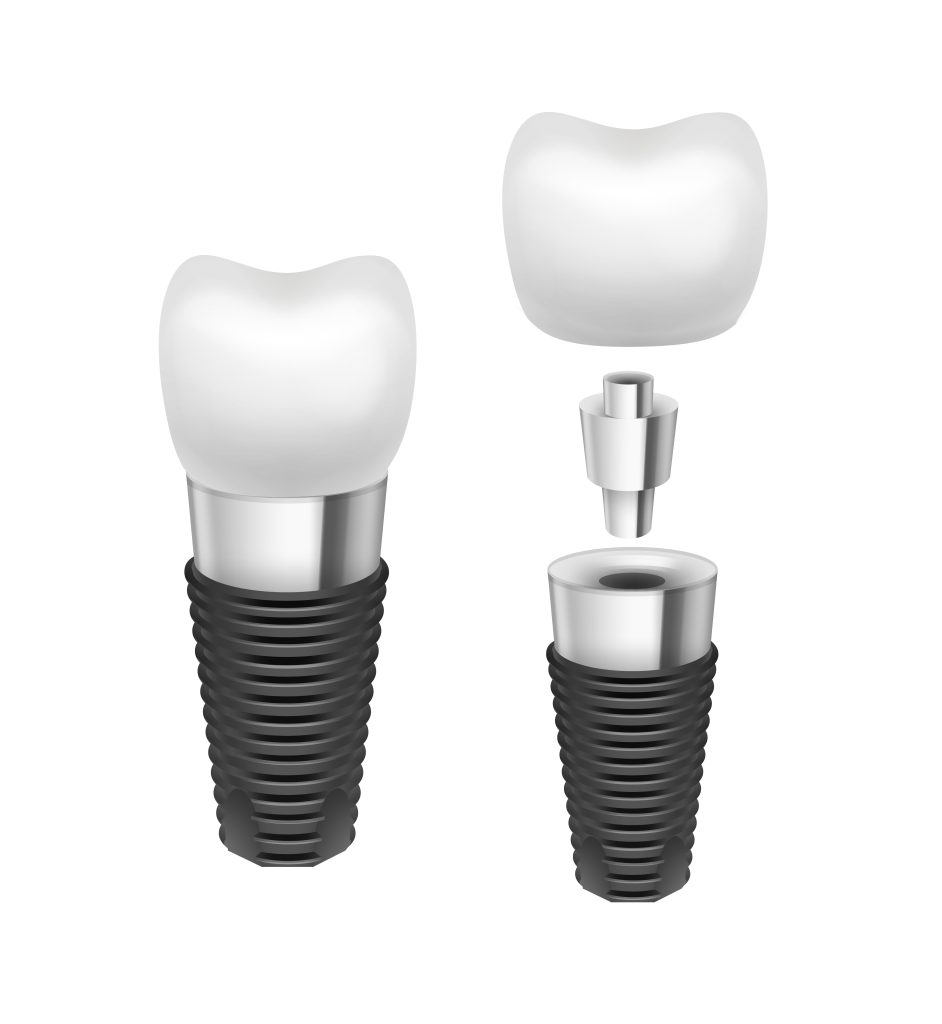
A dental implant is a small, biocompatible post—usually titanium or zirconia—that replaces the root of a missing tooth. It supports a crown, bridge, or denture to create a stable, natural-looking replacement.
A complete implant tooth has three parts:
- Implant fixture – the post placed gently into your jawbone
- Abutment – the connector piece on top of the implant
- Crown, bridge, or denture – the visible part that looks like your natural teeth
Once healed, the implant is fixed in place. You don’t remove it, and you can eat, talk, and smile without worrying about it moving around.
Why Choose Dental Implants?
Compared with traditional bridges or removable dentures, implants offer many advantages:
-
Look and feel like natural teeth
Custom-made to match the colour and shape of your own teeth. -
Let you eat comfortably and confidently
Enjoy ugali, nyama choma, chapati, apples—without worrying about loose teeth. -
Preserve jawbone and facial shape
Implants stimulate the bone, helping prevent the “sunken” look that can come with missing teeth. -
Protect neighbouring teeth
Unlike bridges, implants don’t require grinding down healthy adjacent teeth. -
Long-term value
With good care, implants can last many years—often decades. -
No slipping or clicking
Especially important for people who struggle with loose partial or full dentures.
If you’re tired of hiding your smile or avoiding certain foods, implants may give you back the freedom you’ve been missing.
Are You a Candidate for Dental Implants?
You may be a good candidate for implants if:
- You are missing one or more teeth
- Your gums are reasonably healthy
- You have enough bone to support an implant (or are willing to consider bone grafting)
- You are generally healthy (controlled diabetes, hypertension, etc. are often fine)
- You don’t smoke, or you’re willing to reduce/quit during healing
Even if you’ve been told before that you “don’t have enough bone”, advances in grafting and planning mean you may still have options.
During your implant consultation at Ridgepark Dental Clinic, we will:
- Take a detailed medical and dental history
- Examine your mouth and bite
- Take digital X-rays, and where indicated, 3D imaging
- Discuss your goals, concerns, and budget
- Explain all suitable options (implants, bridges, partials, etc.)
You’ll leave with a clear understanding of what’s possible in your specific case.
Types of Dental Implant Solutions We Offer
We don’t believe in “one size fits all”. At Ridgepark, we plan implant treatments around your mouth and your priorities.
1. Single Tooth Implants
For one missing tooth, a single implant with a crown is often the best solution. It:
- Looks and feels like the original tooth
- Doesn’t touch or damage neighbouring teeth
- Is easy to clean and maintain
Ideal if you’ve lost a tooth due to decay, trauma, or a failed root canal.
2. Multiple Tooth Implants / Implant Bridges
If you’re missing several teeth in a row, we can place:
- Two or more implants
- Supporting a fixed implant bridge over the gap
This avoids using removable partial dentures and provides excellent strength and stability.
3. Full-Arch / Full-Mouth Implant Options
For patients missing all or most teeth in one jaw, we can discuss:
- Implant-supported dentures – removable, but much more stable than traditional plates
- Fixed full-arch bridges on implants – often 4–6 implants to support a full set of teeth
These treatments can dramatically improve chewing, speech, and appearance compared with traditional dentures.
The Dental Implant Process at Ridgepark Dental Clinic
We take a careful, step-by-step approach so your treatment is predictable and comfortable.
Step 1: Consultation & Planning
- Comprehensive examination of teeth, gums, and bite
- X-rays and, if needed, 3D imaging to assess bone
- Discussion of your goals and expectations
- Presentation of all realistic options, pros/cons, and alternatives
- Provision of a personalised treatment plan and cost estimate
No pressure, no rushed decisions—you’ll have time to ask all your questions.
Step 2: Pre-Treatment (If Needed)
Some patients need preparation before implant placement, such as:
- Tooth extraction
- Treatment of gum disease
- Bone grafting or sinus lift to build up thin or soft bone
We’ll explain clearly if any of these are recommended in your case and why.
Step 3: Implant Placement
On the day of surgery:
- We numb the area thoroughly with local anaesthetic
- The implant is placed gently into the bone
- In some cases, a temporary tooth can be fitted on the same day; in others, we protect the area while it heals
Most patients are surprised by how comfortable the procedure is—often much easier than they imagined.
Step 4: Healing & Osseointegration
Over the next 3–6 months, the implant fuses with your bone in a process called osseointegration. During this time, you:
- May wear a temporary tooth or modified denture for appearance
- Should avoid biting very hard directly on the implant area
- Come for a few quick review visits so we can monitor your healing
Healing times vary depending on your health and the area treated.
Step 5: Final Tooth (Crown, Bridge, or Denture)
Once the implant is fully integrated:
- We expose the top of the implant (if it’s covered) and place a small healing cap.
- We take impressions or digital scans of your mouth.
- Our lab creates a custom crown, bridge, or denture.
- We attach your final restoration and adjust your bite.
You leave with a strong, natural-looking tooth (or teeth) you can use and smile with every day.
Does Getting a Dental Implant Hurt?
This is one of the questions we hear most often.
- During the procedure, we use local anaesthetic, so you should feel pressure but not pain.
- Afterwards, mild soreness or swelling is common for a few days.
- Most patients manage comfortably with over-the-counter pain relief and are surprised how quickly they feel normal again.
If you’re particularly anxious, please tell us. We’re used to caring for nervous patients and can plan your visit to make it as calm as possible.
How Much Do Dental Implants Cost in Nairobi?
Implants are a more significant investment than bridges or dentures, but they also offer:
- Greater comfort
- Better chewing function
- Ability to protect bone and neighbouring teeth
- Long-term durability
Costs depend on:
- How many teeth are being replaced
- Whether bone grafting or extractions are needed
- The type of restoration (single crown, bridge, or full-arch solution)
- Materials used and complexity of your bite
At Ridgepark Dental Clinic, we:
- Provide a clear written quotation before treatment
- Break down fees so you understand exactly what you’re paying for
- Offer staged payments over the course of treatment for many implant cases
To know what implants would cost for you personally, the only honest answer is: come for an assessment. We’ll be straightforward and transparent.
Dental Implants vs Bridges vs Dentures
Choosing between options can be confusing. Here’s a simple comparison:
Dental Implants
- Fixed in place, not removable
- Don’t affect neighbouring teeth
- Help preserve jawbone
- Higher upfront cost, excellent long-term value
Dental Bridges
- Fixed in place
- Require grinding down adjacent teeth
- Don’t prevent bone loss under the missing tooth
- Shorter treatment time, typically lower cost than implants initially
Removable Dentures
- Removable; may move when talking or eating
- Usually the most affordable option
- Can feel bulky, may affect taste and speech
- Do not stimulate bone; jawbone continues to shrink over time
We’ll discuss all three in the context of your mouth, your priorities, and your budget, then help you decide.
Caring for Your Dental Implants
Implants can last many years—often decades—if you look after them well.
We recommend:
- Brushing twice a day with fluoride toothpaste
- Cleaning between teeth and around implants daily (floss or interdental brushes)
- Attending regular checkups and professional cleanings
- Avoiding smoking, which increases the risk of implant problems
- Wearing a night guard if you grind your teeth
At your review visits, we’ll check your implants, bone levels, and surrounding gums to keep everything healthy.